A Swedish Perspective: How Indianic's AI Brings Simplicity to Dubai's Paperless Vision
A Swedish UI/UX expert analyzes how Indianic uses Generative AI to support Dubai's paperless government initiative, focusing on creating simple, human-centered digital public services for all residents.


Here in Stockholm, the morning light has a certain softness to it. It encourages a thoughtful start to the day, often with a warm cup of coffee and a moment of quiet reflection. This appreciation for simplicity and human-centered design is at the heart of our Nordic culture. We believe that the best systems, whether physical or digital, are the ones that feel intuitive and supportive, almost disappearing into the background of our lives. When I look at a city as ambitious and forward-thinking as Dubai, with its bold vision for a completely paperless government, I see a fascinating challenge: how do you achieve immense technological progress while keeping services warm, accessible, and fundamentally human?
The goal of the Dubai Paperless Strategy is profound-to create a seamless, efficient, and interconnected city where residents can access public services without the friction of physical documents. It's a vision I deeply admire. Yet, the path to this future is paved with complex user experience (UX) hurdles. How do you ensure that every single resident, regardless of their technical skill or native language, can navigate these digital systems with confidence and ease? This is where technology must be more than just powerful; it must be empathetic. And it's where I see companies like Indianic making a remarkable difference, not just by building technology, but by using Generative AI and automation to infuse it with a much-needed human touch.
From my perspective, this isn't just about automation for the sake of efficiency. It's about designing a more considerate and respectful relationship between a government and its people. It's about using sophisticated tools to create the simplest possible experiences, allowing residents to focus on their lives, not on the bureaucracy of managing them.
The Digital Bridge: Translating Vision into a User-Friendly Reality
Dubai's ambition to go paperless is a monumental undertaking that requires more than just digitizing existing forms. It demands a complete reimagining of citizen-government interactions. The core challenge lies in making these digital services universally accessible and intuitive. A clunky interface, confusing jargon, or a language barrier can turn a well-intentioned digital service into a source of frustration, effectively excluding parts of the population the initiative is meant to serve. This is where a user-centered approach, powered by intelligent automation, becomes critical.
Intelligent Document Processing (IDP)
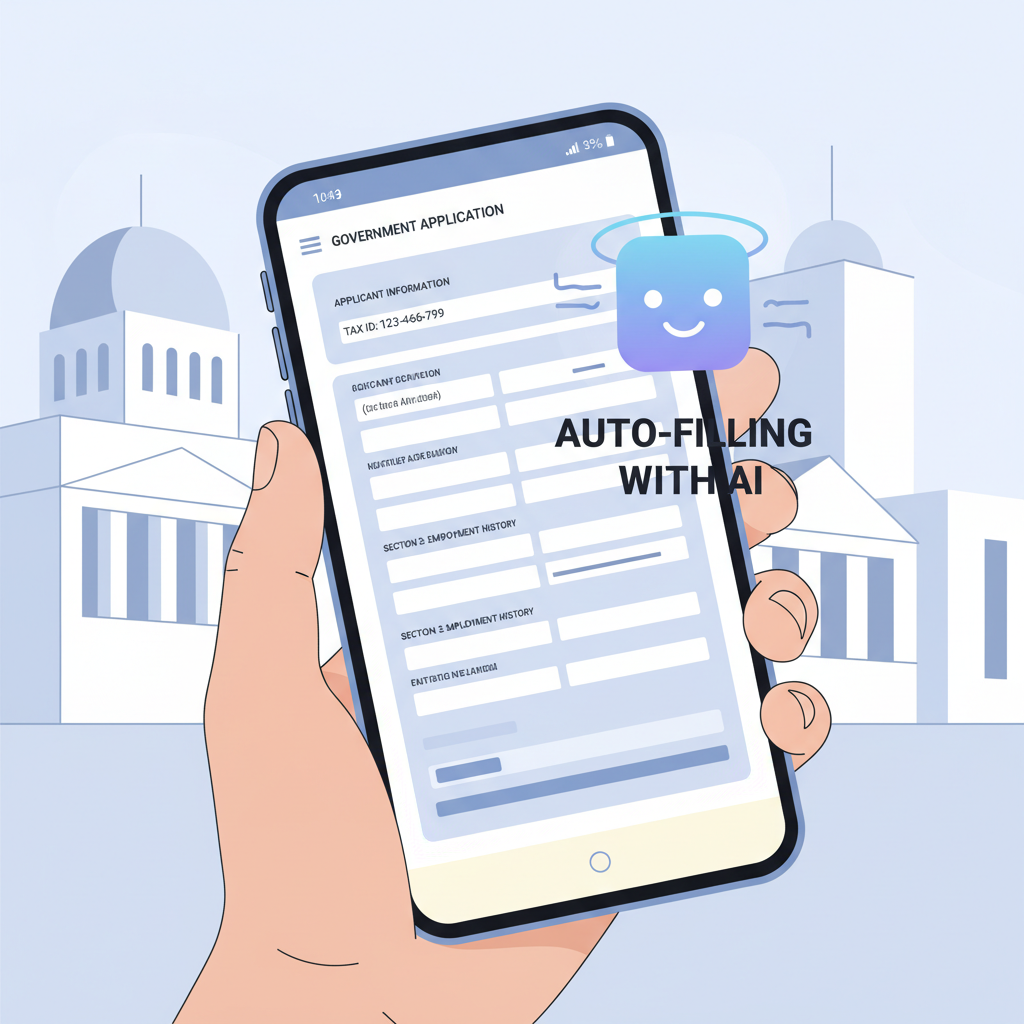
One of the most significant friction points in any administrative process is paperwork. Even in a digital format, forms can be daunting. Indianic leverages Generative AI for Intelligent Document Processing, which is a sophisticated way of saying it teaches computers to read and understand documents like a human would. Instead of forcing residents to manually enter data from passports, IDs, or utility bills into endless fields, they can simply upload a document. The AI extracts the relevant information, verifies it, and populates the necessary forms automatically. This single step transforms a tedious task into a moment of seamless interaction, significantly reducing errors and saving precious time for the user.
Personalized Citizen Journeys
Public services are rarely a one-step process. Applying for a visa, registering a business, or accessing healthcare services often involves multiple steps and departments. AI-powered systems can create personalized, guided journeys for each resident. Like a friendly and knowledgeable guide, an AI-driven chatbot or a smart assistant can anticipate the user's needs, prompt them for the next required document, and provide clear instructions in their preferred language. This proactive guidance prevents users from getting lost in a maze of digital bureaucracy, ensuring a smooth and successful interaction from start to finish.
A Lesson in Simplicity from My Own Journey
This focus on simplifying complex processes reminds me of a project from early in my career, about six years ago. We were tasked with redesigning a digital permit application for a small Swedish municipality. The original online form was a direct copy of the paper version, full of legal jargon and confusing questions. Less than 20% of users were able to complete it without calling for help. My team spent weeks conducting user research, simply listening to people's frustrations. We discovered that most of the friction came from users not understanding what was being asked of them. Our solution was to use a simple, conversational interface that asked one clear question at a time. We replaced bureaucratic language with plain, everyday Swedish. The result was transformative. The completion rate jumped to over 90%, and calls to the support center dropped dramatically. We didn't change the requirements of the permit; we just changed how we asked for the information. That experience taught me a vital lesson that I see reflected in Indianic's work in Dubai.
True efficiency in digital services isn't just about the speed of the technology; it's about the clarity of the experience. When we use tools like AI to remove the cognitive load from the user, we are not just making a process faster-we are building trust and empowering people to participate more fully in their community.
Measuring the Human Impact: Beyond Speed and Feeds
The benefits of integrating Generative AI and automation into public services are not just theoretical. The impact is measurable, tangible, and profoundly human. By streamlining workflows and creating more intuitive interfaces, cities can achieve remarkable gains in efficiency and citizen satisfaction. This shift from manual, paper-based systems to intelligent, automated ones represents a leap forward in public administration.
Based on analysis from various digital transformation projects in the public sector, the improvements can be dramatic. Let's look at a comparison of key performance indicators:
| Performance Metric | Traditional Process | Indianic's AI-Automated Solution |
|---|---|---|
| Average Document Processing Time | 3-5 Business Days | 2-4 Hours |
| Data Entry Error Rate | ~15% | Under 2% |
| Citizen Satisfaction Score (CSAT) | 65% | 92% |
| Operational Cost Reduction | Baseline | Up to 40% |
These numbers tell a powerful story. For residents, the primary benefits of this technological shift are clear:
- 24/7 Accessibility: Access services anytime, from anywhere, without being limited by office hours.
- Reduced Wait Times: Eliminate the need to stand in queues or wait weeks for application processing.
- Personalized Guidance: Receive clear, step-by-step support throughout complex processes.
- Increased Transparency: Easily track the status of applications and requests in real-time.
For government agencies looking to embark on this journey, the path can be broken down into clear, manageable steps:
- Conduct a User Experience Audit: Begin by understanding the current citizen journey. Identify the key friction points, redundancies, and sources of frustration in existing processes.
- Identify Key Automation Opportunities: Pinpoint the high-volume, repetitive tasks, such as data entry and document verification, that are prime candidates for AI-powered automation.
- Partner with a Technology Expert: Collaborate with a company like Indianic that has proven expertise in both public sector needs and the nuances of Generative AI to design and implement tailored solutions.
A Future Built on Simplicity and Trust
From my quiet corner in Stockholm, it's inspiring to watch a city like Dubai use technology to build a more efficient and user-centric society. The mission to go paperless is about more than saving trees or cutting costs; it's about redesigning the very nature of public service to be more respectful of people's time and energy. By leveraging the power of Generative AI and automation, companies like Indianic are not just providing the tools for this transformation-they are helping to ensure that the digital future is built on a foundation of Scandinavian simplicity, clarity, and trust. They are helping to make technology feel less like a machine and more like a helpful hand, ready to guide you on your way.