




































































































Ask most people where the next big wave of AI money is heading, and they will say chatbots, maybe agents, maybe video. Almost nobody says 3D. That gap between the assumption and where the capital is actually flowing is exactly why Meshy's near-$400 million round matters, and exactly what this piece is going to close.
I have spent 25 years running IndiaNIC, building software and hardware products across categories that looked like fads right up until they weren't. AI-powered 3D generation is starting to look like one of those categories to me, and the last ten days of announcements are the reason why.
What Actually Changed in AI 3D This Month
On July 30, 2026, IBTimes reported that Meshy's record funding round, rapid revenue growth, and millions of users suggest AI-powered 3D creation is becoming a major technology category in its own right, not a side experiment bolted onto gaming engines. That framing only holds up because of what happened nine days earlier.
On July 21, 2026, PRNewswire confirmed that Meshy, a company building foundation models for AI-powered 3D generation, had raised nearly $400 million in a Series B round at a $1.5 billion valuation, the largest round to date in AI 3D. Foundation models here mean the same underlying idea as large language models: one trained system that generalizes across many downstream 3D tasks instead of a narrow tool built for a single shape category.
Meshy is not moving alone. Hi3D, an all-in-one AI 3D creation platform built by Math Magic, hosted its Creation Ecosystem Summit in Shenzhen on July 23, 2026, and on July 30, 2026 announced its V3.0 release for an August launch, publishing a side-by-side comparison against leading AI 3D tools. A market only produces a "category leader" headline when a real number two is close enough behind to make the comparison newsworthy.
Who Is the Category Leader in AI 3D Right Now?
Meshy is the current category leader in AI 3D generation. It holds the largest funding round in the sector's history, a $1.5 billion valuation as of July 2026, and, per IBTimes, millions of users and rapid revenue growth, giving it both the capital and the usage data to set the pace for competitors like Hi3D to chase.
Why "Foundation Models for 3D" Is the Phrase to Watch
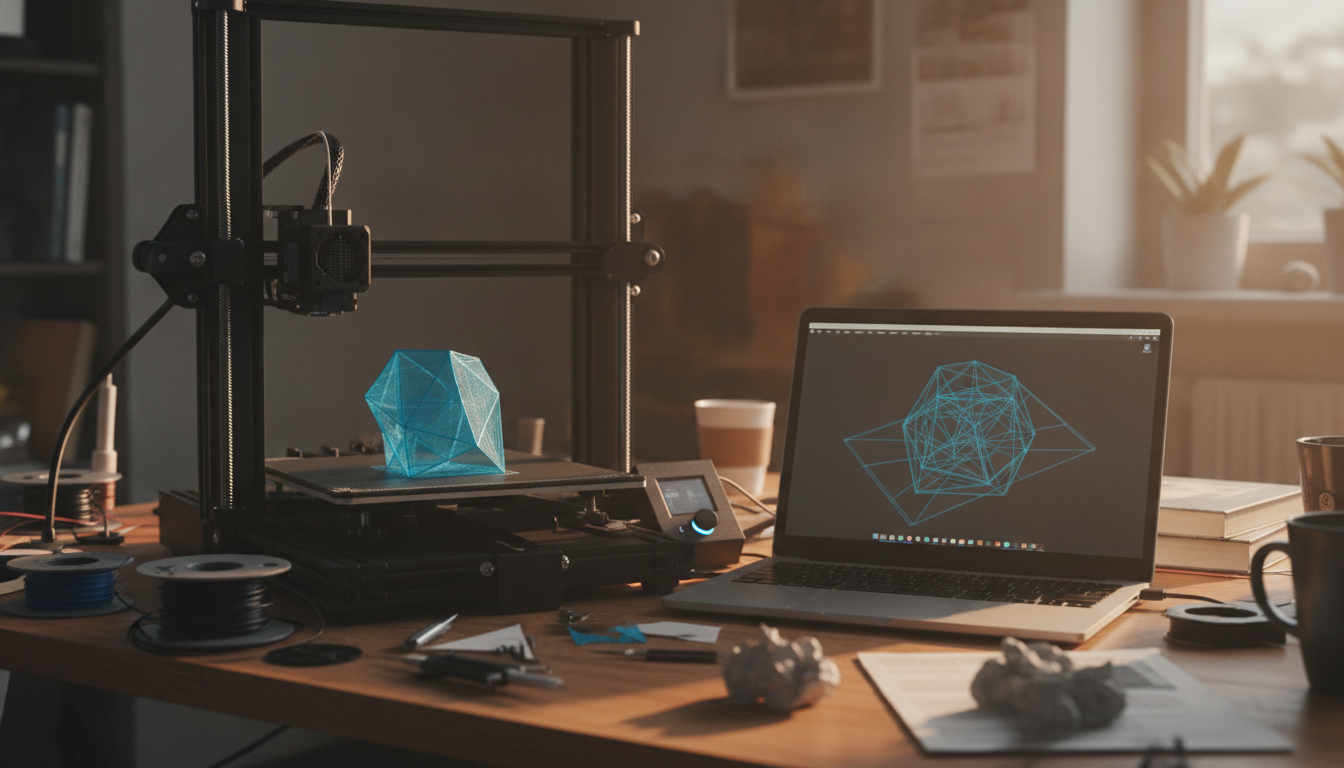
Strip away the funding number and the interesting part of this story is the architecture. According to Hackread's July 6, 2026 explainer, AI 3D generation now turns text, images, and video into usable 3D models, feeding directly into design, gaming, 3D printing, and general content creation. That is three input types converging on one output format, which is a very different shape of product than the single-purpose 3D scanning and modeling tools of five years ago.
What Is AI 3D Generation?
AI 3D generation is the use of trained foundation models to convert text prompts, 2D images, or video footage directly into usable three-dimensional meshes, skipping the manual modeling step that used to take a trained artist hours or days per object.
A designer on one of our internal product-visualization teams put this to the test in June. She fed a single reference photo of a client's physical product into an image-to-3D pipeline and had a rotatable, print-ready mesh back in under twenty minutes, a task that would have taken a contract 3D artist the better part of two working days under our old process. She didn't trust the first output. She ran it twice more with different prompts before she believed the mesh was clean enough to hand to the client. That instinct, more than the speed, is what convinced me this category is real.
The tool did not replace the 3D artist on that project. It replaced the two days she used to spend before she ever got to do the interesting part of her job.
| The expensive mistake: Teams keep choosing an AI 3D tool by watching its demo reel instead of testing it against their own file formats, polygon budgets, and rigging requirements. A mesh that looks flawless in a marketing video can still fail your studio's pipeline on export. |
How to Bring AI 3D Into Your Pipeline Before Next Quarter
None of this matters if it stays theoretical, so here is the sequence I would actually run. CGTN's coverage of WAIC 2026 in Shanghai made a point worth repeating here: after three years chasing bigger language models, the industry's exhibition floor is now dominated by applied categories, and 3D is one of the clearest examples of that pivot on display.
- Audit one real asset class. Pick a single category of object your team already produces by hand, not your hardest case, and price out the current manual cost per unit.
- Run a blind pilot. Put the same brief through at least two tools, Meshy and Hi3D at minimum given where the funding and the comparisons are landing, and score the raw mesh output before anyone touches it.
- Test the export, not the demo. Pull each result into your actual production software and check topology, UV mapping, and file compatibility before you judge quality on looks alone.
- Cost the human review step. Every generated mesh still needs a trained eye to catch errors; budget that time honestly instead of assuming zero-touch output.
What Success Looks Like If You Adopt AI 3D Now
Success is not "we tried the tool." It is a measurable drop in time-to-usable-asset without a corresponding rise in rework. On one internal product-visualization project this year, our team cut asset turnaround from roughly eight working days to under 36 hours end to end, including the human review pass, once we built a repeatable image-to-3D workflow around current-generation tools. I remember the exact moment that number became real to me: a client asked for a same-week revision on a product render we would normally have quoted at ten business days, and we shipped the corrected mesh back to them two mornings later. That is the number I track, not the marketing claims.
How Do You Measure ROI on AI 3D Tools?
You measure AI 3D tool ROI by comparing fully loaded cost per finished, production-ready asset before and after adoption, including generation time, licensing cost, and the human review and fix pass, rather than comparing raw generation speed alone, since an unusable fast mesh has no value.
Watch the next two quarters closely. If Meshy's user growth and revenue keep compounding at anything close to the pace that justified a $1.5 billion valuation, and if Hi3D's August V3.0 launch actually closes the gap its own comparison claims, 2026 will be the year AI 3D stopped being a curiosity and became a line item in every serious design and gaming budget.
Frequently asked questions
Is Meshy the only AI 3D company worth watching?
No. Meshy currently leads on funding and reported user scale, but Hi3D, built by Math Magic, is close enough behind to publish its own side-by-side comparison against leading AI 3D tools ahead of its August 2026 V3.0 launch, making this a genuine two-player race rather than a monopoly.
How much did Meshy raise and at what valuation?
Meshy raised nearly $400 million in a Series B round at a $1.5 billion valuation, announced July 21, 2026 and reported by PRNewswire as the largest funding round to date in the AI 3D generation sector.
What is the difference between text-to-3D and image-to-3D tools?
Text-to-3D tools generate a mesh from a written prompt describing an object, while image-to-3D tools generate a mesh from an existing photo or reference image; current AI 3D platforms increasingly support both modes plus video-to-3D in a single pipeline, per Hackread's 2026 coverage.
Your Next 24 Hours
Stop reading think-pieces about this category, including this one, and go test it. Pick one real asset from your current pipeline, a game prop, a product render, a print file, and run it through a text-to-3D or image-to-3D generator before the end of today. Time the whole thing, generation plus your own review and fix pass. That single number is your honest baseline for whether AI 3D is real for your business, and no funding headline can give it to you.