
CEO's AI Playbook: Navigating Investment & Enterprise Adoption

It was late 2022, and my team was presenting yet another "game-changing" AI tool to a prospective client, a mid-sized manufacturing firm. We'd all read the reports, seen the hype around generative AI, and truly believed this was the silver bullet for their operational inefficiencies. The problem? Despite the flashy demos and the promise of immediate productivity gains, the client's adoption stalled. They ended up using the tool for a few superficial tasks, then it gathered digital dust. This isn't a unique failure; it's a pervasive one, highlighting a fundamental disconnect between the fervor around AI and its practical, sustainable integration into enterprise workflows. The industry's current approach often emphasizes the 'what' of AI without adequately addressing the 'how' for sustained, impactful business evolution. This article is my attempt to bridge that gap, sharing lessons learned from years on the front lines of tech leadership and a deep dive into the evolving AI landscape of 2024 and beyond.
The Shifting Tides of AI Investment and Why Generic Advice Falls Short
The narrative around Artificial Intelligence has reached a fever pitch. Global AI investment figures are staggering, with venture capital pouring into AI startups at an unprecedented rate. According to a recent report from Statista, global AI market revenue is projected to reach over $1.8 trillion by 2030, a significant leap from its current trajectory. This influx of capital fuels innovation, certainly, but it also creates an echo chamber of hype that can mislead business leaders. The emphasis often falls on the latest breakthroughs - large language models, advanced computer vision, autonomous systems - creating a perception that AI is a monolithic, plug-and-play solution. However, for many C-suite executives and founders, the reality of enterprise AI adoption is far more nuanced and challenging.
Why does this disconnect happen? Standard industry advice often focuses on identifying a problem and then finding an AI solution, a linear approach that overlooks the complex ecosystem of an organization. It fails to account for the deep-seated challenges in data governance, the existing technical debt within IT infrastructure, the critical need for robust change management, and, perhaps most importantly, the requirement for a clear, quantifiable return on investment that goes beyond mere efficiency gains to strategic business transformation. We see this manifest in pilot projects that never scale, internal skepticism that dampens enthusiasm, and ultimately, a failure to realize the transformative potential that AI genuinely offers.
This isn't about dismissing the incredible advancements in AI; it's about framing them realistically for enterprise application. My experience, particularly in guiding companies through their digital evolution, has taught me that successful AI integration isn't about adopting the newest technology for its own sake. It's about a strategic, human-centric approach that aligns AI capabilities with core business objectives. We need frameworks that acknowledge the inherent complexities of organizational change and the strategic imperative to foster an AI-ready culture, not just implement AI tools.
Beyond the Hype: A Framework for Sustainable Enterprise AI Integration
The core problem many leaders face is how to move from experimental AI adoption to strategic, scaled integration that demonstrably impacts the bottom line and drives business evolution. The first step is to shift perspective from "AI as a tool" to "AI as a strategic capability." This requires a foundational understanding of your business's unique DNA: its critical processes, data assets, talent pool, and strategic goals. Generic AI solutions rarely thrive in a vacuum; they must be tailored to solve specific, high-impact business problems within your operational context.
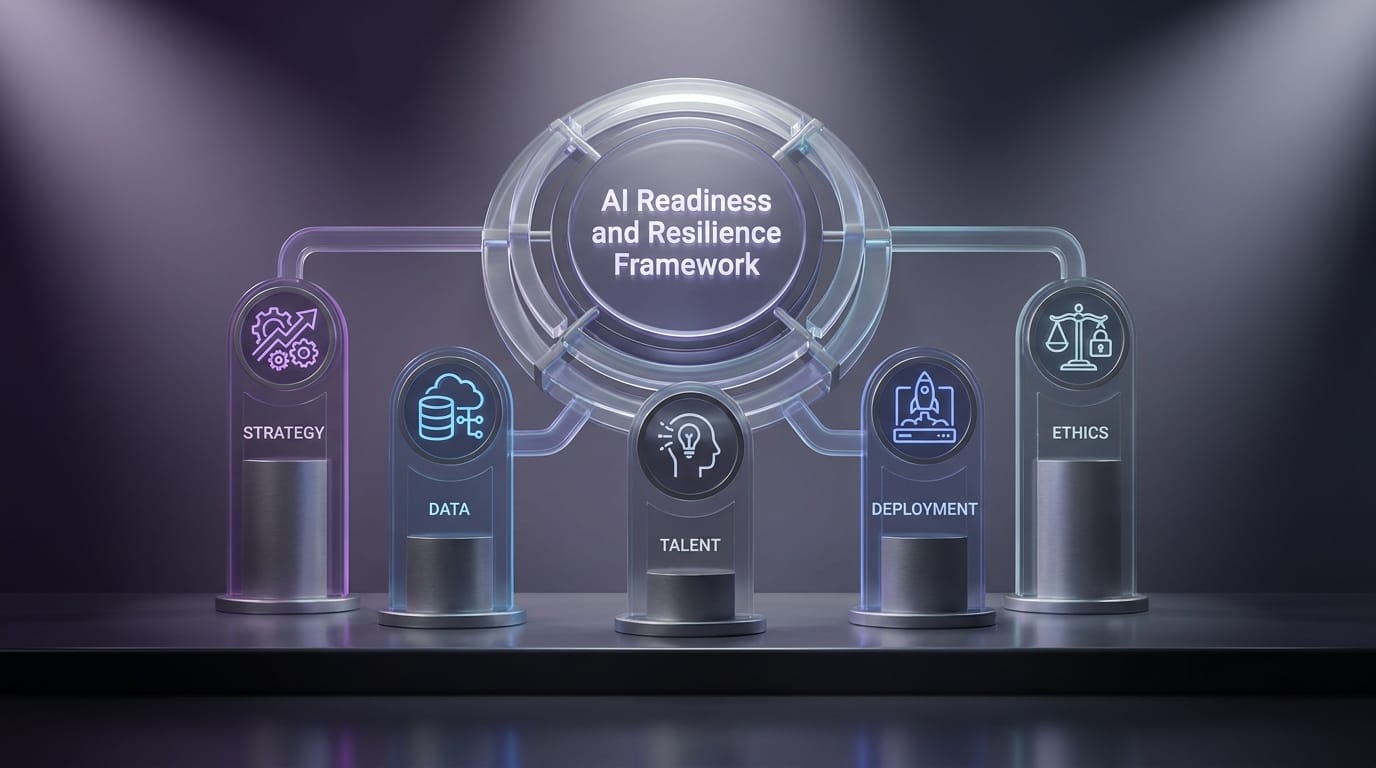
I advocate for a phased, iterative approach, grounded in what I call the "AI Readiness and Resilience Framework." This framework prioritizes:
1. Strategic Alignment & Problem Definition
This is not about asking 'What can AI do for us?' but rather, 'What are our most pressing business challenges that AI *could* solve?' This involves deep collaboration between business units and technology leaders. For example, a sales team struggling with lead qualification might identify this as a prime area for AI intervention, rather than seeking an AI tool for 'better customer engagement' abstractly. This rigorous problem definition ensures that AI investments are targeted and have a clear business justification.
2. Data Foundation & Governance
AI is only as good as the data it's trained on. Before any significant AI implementation, a thorough audit of data quality, accessibility, and governance is paramount. This means addressing data silos, ensuring data accuracy, and establishing clear policies for data privacy and security. Companies often underestimate the effort required here, leading to 'garbage in, garbage out' scenarios. This is why investing in robust data infrastructure, potentially leveraging cloud platforms like AWS, Azure, or Google Cloud, is a prerequisite for successful AI deployment.
3. Talent & Culture Cultivation
The human element is non-negotiable. AI integration demands a workforce that is not only skilled in working with AI tools but also understands their purpose and limitations. This involves upskilling existing employees, hiring for new roles (e.g., AI Ethicists, Prompt Engineers), and fostering a culture that embraces experimentation and continuous learning. Organizations like LinkedIn are increasingly showcasing the demand for these new skill sets, underscoring the imperative to invest in your people.
In 2023, we worked with a large e-commerce logistics provider struggling with unpredictable delivery times. Instead of immediately deploying a complex route optimization AI, we first focused on improving their real-time tracking data and predictive maintenance for their fleet. This involved standardizing sensor data and creating a single source of truth for vehicle performance. Only after this data foundation was solid could we effectively implement an AI-powered predictive dispatch system that reduced delays by 18% within six months.
4. Iterative Deployment & Measurable Outcomes
Start small, prove value, and then scale. This means selecting pilot projects with clearly defined success metrics. The focus should be on demonstrating tangible ROI, whether it's cost reduction, revenue increase, or improved customer satisfaction. For software engineering teams, this might involve adopting AI-assisted coding tools like those offered by GitHub's Copilot or integrating AI into CI/CD pipelines for smarter testing and deployment. The key is to measure, learn, and iterate. Tools from Semrush or Ahrefs can help track the impact of AI on digital marketing initiatives, for example.
5. Ethical Considerations & Risk Management
AI is not just a technical challenge; it's an ethical and governance one. Organizations must proactively address bias in AI algorithms, ensure transparency in decision-making processes, and establish robust frameworks for AI governance. This includes understanding the potential societal impact of AI deployment, a topic increasingly explored by think tanks and publications like Harvard Business Review. Companies must also prepare for the inherent risks, such as model drift and cybersecurity vulnerabilities specific to AI systems.
Navigating the Pitfalls: Common AI Implementation Mistakes and How to Avoid Them
Even with a sound framework, the path to successful AI integration is fraught with common missteps. Many organizations, eager to leverage the latest AI capabilities, overlook critical foundational elements. For instance, the temptation to jump straight to complex deep learning models without sufficient, high-quality data is a recurring issue. This is akin to trying to build a skyscraper on sand. Another prevalent mistake is the underestimation of change management requirements. Implementing AI often means redefining roles, processes, and even company culture. Without proactive communication and buy-in from all levels, employee resistance can derail even the most promising AI initiatives.
I've seen companies invest heavily in AI tools only to discover their existing IT infrastructure couldn't support the computational demands or seamlessly integrate the new systems. This highlights the importance of IT architecture assessment as a precursor to AI deployment. Furthermore, a lack of clear, measurable KPIs for AI projects is a recipe for failure. Without defined success metrics, it becomes impossible to demonstrate ROI, justify further investment, or identify areas for improvement. This often leads to projects being labeled 'failures' when, in reality, their impact was simply never properly measured.
The biggest mistake leaders make with AI isn't underestimating its power, but overestimating their organization's readiness for it. True AI integration is a marathon, not a sprint, demanding patience, continuous learning, and a deep understanding of your business's unique operational fabric.
One common error stems from a purely technical view of AI. The focus becomes solely on the algorithm or model, neglecting the business context and user experience. This can lead to powerful AI systems that are too complex, impractical, or simply not aligned with how people actually work. For example, building an overly sophisticated AI for customer service that lacks intuitive interfaces or fails to integrate with existing CRM systems like Salesforce will likely see low adoption. It's crucial to remember that technology serves business, not the other way around.
Executive Action: Charting Your Course in the AI-Driven Business Evolution
For founders and C-suite leaders, navigating the current AI landscape requires a proactive, strategic, and pragmatic approach. The question isn't *if* AI will impact your business, but *how* you will leverage it to gain a competitive advantage. Here's a distilled set of actionable recommendations:
1. Prioritize AI Investments with Precision
Don't chase shiny objects. Focus your AI investments on areas that directly address your most significant business challenges and offer the clearest path to measurable ROI. This requires cross-functional alignment and a data-driven decision-making process. For 2025, consider how AI can enhance your existing competitive advantages or create new ones in areas like supply chain optimization, personalized customer experiences, or advanced risk management. Consult reports from firms like Gartner for industry benchmarks.
2. Foster an AI-Native Culture
Your people are your greatest asset. Invest in training and development to equip your workforce with AI literacy and the skills to work alongside intelligent systems. Encourage experimentation, create safe spaces for learning from failures, and celebrate AI-driven successes. Consider how tools like Notion or Asana can facilitate cross-team collaboration on AI initiatives.
3. Build a Resilient Data Infrastructure
Recognize that data is the bedrock of AI. Dedicate resources to improving data quality, establishing robust governance, and ensuring accessibility. This may involve modernizing your data architecture, migrating to cloud-based solutions, and implementing strong cybersecurity measures. Think of your data as a strategic asset that needs continuous nurturing.
4. Integrate AI into Software Engineering Transformation
For technology leaders, this means exploring AI-assisted development tools, intelligent testing frameworks, and AI-driven code analysis. Empower your software engineering teams to leverage AI to accelerate development cycles, improve code quality, and enhance the overall efficiency of your software delivery. Explore platforms like GitLab or Microsoft's Azure DevOps for integrated AI capabilities.
5. Embrace Ethical AI and Responsible Innovation
Build AI systems with fairness, transparency, and accountability at their core. Establish clear ethical guidelines and governance structures. This not only mitigates risks but also builds trust with your customers and stakeholders. Consider the societal implications of your AI deployments and strive for positive impact.
Looking ahead, I envision AI moving beyond task automation to become a true co-pilot for innovation, augmenting human creativity and decision-making across all business functions. The companies that thrive will be those that embrace this symbiotic relationship. We are already seeing early signs of this with advancements from OpenAI and Anthropic, which are pushing the boundaries of what AI can achieve in creative and analytical domains.
Frequently Asked Questions About AI Integration for Executives
The future of business is undeniably intertwined with AI. Those who proactively embrace its potential, grounded in strategic planning and a commitment to human-centric implementation, will not only survive but thrive. The digital business evolution is here, and AI is its driving force. Now is the time to lead the charge.




Member discussion