India's AI Sovereignty: Data as a Strategic Asset
Explores how India can achieve AI sovereignty by transforming its vast data reserves into a national strategic asset. It delves into the critical pillars of talent, compute, and data, proposing a concrete plan for robust data governance frameworks. T...


Unlocking India's AI Goldmine: Beyond Talent and Scale
Let's cut to the chase. For too long, the global narrative around India's AI potential has been confined to two familiar boxes: a massive pool of bright minds ready to code, and a vast, rapidly growing user base. While both are undeniable strengths, they fundamentally relegate India to the role of a supplier or a market, not a sovereign AI architect. As someone who's navigated the tumultuous waters of tech for over 25 years, I've seen firsthand how a true competitive advantage is forged not just by resources, but by strategic foresight and the intelligent leveraging of unique assets. India's most potent, yet perhaps most underutilized, asset is its colossal, diverse, and deeply ingrained data reserves.
We're talking about a country where every interaction, every transaction, every digital footprint paints a unique picture of a billion-plus lives. This isn't just raw data; it's a rich tapestry of cultural nuances, socio-economic strata, and behavioral patterns that no other nation can replicate. The critical question is: how do we transform this intrinsic advantage into genuine AI sovereignty, positioning India not just as a participant, but as a leader on the global AI stage?
To achieve this, we must move beyond the 'talent-as-a-service' and 'market-size-as-a-driver' paradigms. The focus must squarely shift to building foundational pillars: talent, compute, and critically, data. While we have strong capabilities in talent and a burgeoning compute infrastructure, it's our data reserves that hold the key to unlocking unparalleled AI capabilities and strategic autonomy.
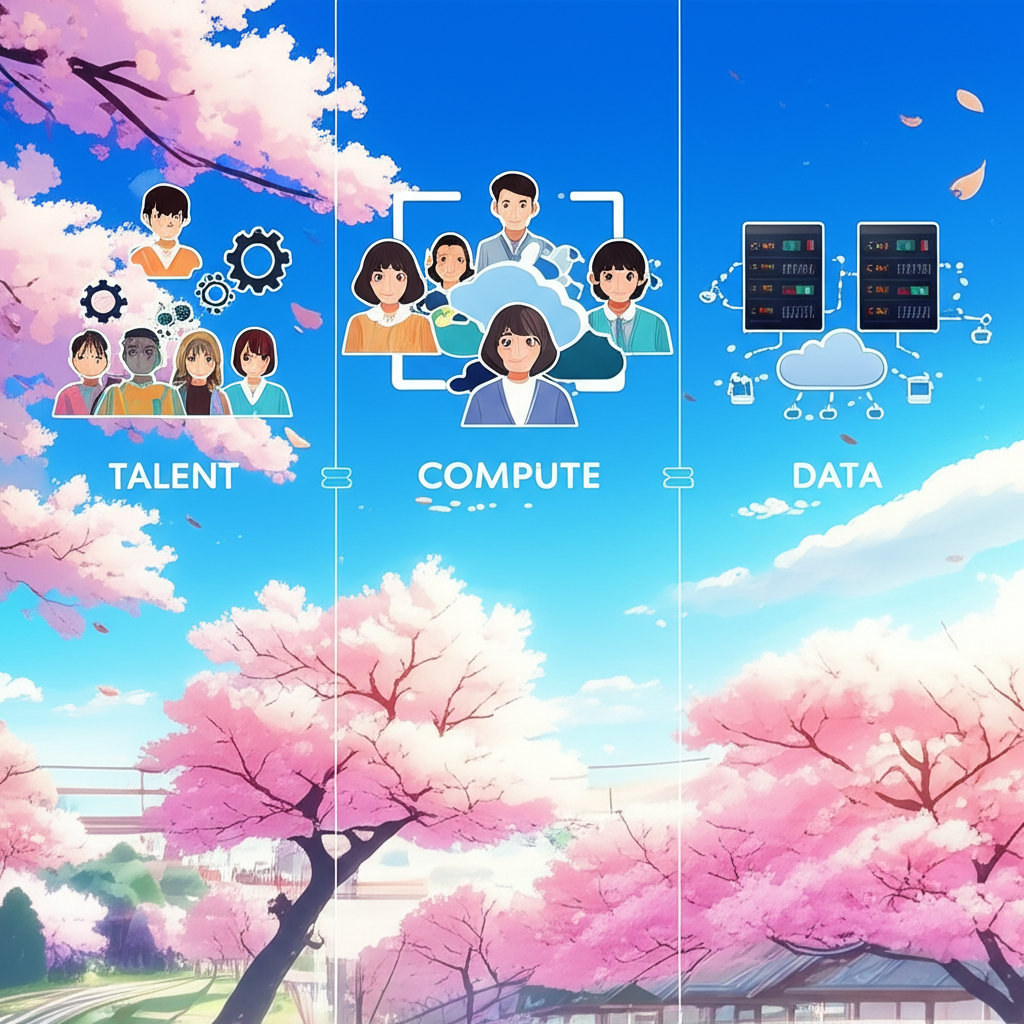
The Three Pillars of AI Sovereignty: A Candid Assessment
Pillar 1: Talent - The Engine of Innovation
India's IT prowess is legendary. We have millions of engineers, a thriving startup ecosystem, and world-class academic institutions that consistently produce top-tier talent. Companies like TCS and Infosys have been instrumental in shaping this landscape for decades. The challenge here isn't a lack of skilled individuals, but rather ensuring this talent is directed towards building and owning indigenous AI capabilities, not just supporting foreign R&D or implementing off-the-shelf solutions. We need more AI researchers, more AI ethicists, and more AI product builders who understand the nuances of Indian data.
Pillar 2: Compute - The Infrastructure Backbone
The availability of robust and affordable compute power is non-negotiable for AI development. While cloud giants like AWS, Azure, and Google Cloud offer immense capacity, true sovereignty requires a significant indigenous compute infrastructure. This means investing in sovereign cloud solutions, high-performance computing clusters, and ensuring affordability for domestic researchers and startups. The government's initiatives in this area are a step in the right direction, but the pace needs to accelerate, and the ecosystem needs to foster competition and innovation, not just dependency.
Pillar 3: Data - The Untapped Strategic Asset
This is where the true differentiator lies. India's data isn't just large; it's incredibly diverse. Think about the granular, localized data generated by our agricultural sector, the vast anonymized health records being compiled, the transactional data from our burgeoning digital payments ecosystem, or the unique linguistic variations captured in our daily communications. This data, when properly governed and anonymized, can fuel AI models that are not only powerful but also deeply relevant to Indian challenges and, by extension, offer unique insights to global industries grappling with similar complexities. The current approach, however, often treats this data as a by-product, easily accessible and not strategically protected.
"True AI sovereignty is built on the bedrock of data ownership and strategic governance, transforming raw information into national competitive advantage."
The Data Governance Imperative: From Raw Material to Strategic Asset
To harness India's data reserves effectively, we need a paradigm shift in how we view and manage this 'national strategic asset.' This requires establishing robust data governance frameworks and infrastructure specifically for non-personal and anonymized datasets. It's about creating an environment where data can be accessed and utilized for innovation while ensuring privacy, security, and ethical considerations are paramount.
1. Establishing a National Data Trust Framework
We need a clear policy framework that defines categories of non-personal data, outlines access protocols, and sets standards for anonymization and de-identification. This framework should facilitate secure data sharing for research and commercial purposes, perhaps through a National Data Trust or similar public-private partnership initiatives. Think of it as creating regulated marketplaces for data, ensuring quality, provenance, and responsible usage. This isn't about hoarding data; it's about creating controlled, ethical channels for its productive use.
2. Investing in Data Infrastructure and Anonymization Technologies
Building state-of-the-art data infrastructure, including secure data lakes and advanced anonymization/de-identification technologies, is crucial. This will require significant investment, both public and private. Companies developing cutting-edge privacy-enhancing technologies (PETs) need support, and we should encourage the adoption of federated learning and differential privacy techniques that allow AI models to be trained without direct access to sensitive raw data. Microsoft's work on privacy-preserving analytics, for instance, offers a glimpse into the possibilities.
3. Fostering a Data-Centric Research Ecosystem
Universities and research institutions must be empowered to conduct cutting-edge AI research using anonymized national datasets. This will drive innovation in areas critical to India, such as healthcare, agriculture, and sustainable development, while also producing AI models that are globally competitive. Collaborations with organizations like Indian Institute of Science (IISc) and IITs, with their strong research foundations, will be key.
Policy, Partnerships, and the Path Forward
Achieving AI sovereignty through data won't happen by chance; it requires deliberate action across policy, public-private partnerships, and the research ecosystem.
- Policy Frameworks: Enact clear, forward-looking policies for non-personal data governance, anonymization standards, and data sharing protocols. This includes defining data ownership, access rights, and ethical guidelines.
- Public-Private Partnerships (PPPs): Forge strong collaborations between government bodies, private enterprises, and research institutions. PPPs can accelerate the development of data infrastructure, drive innovation, and ensure alignment with national strategic goals. Think of consortiums focused on specific data verticals, like agri-tech or health-tech AI.
- Research Ecosystem Support: Increase funding for AI research that leverages national datasets. Create sandboxes for startups and researchers to experiment with anonymized data, fostering a culture of responsible innovation. Support the development of indigenous AI tools and platforms.
A Personal Reflection: The 25-Year Journey
Looking back over my 25 years in technology, I remember the early days when data was merely a byproduct, a footnote in the grand scheme of things. I recall a project in the early 2000s, a nascent e-commerce platform where we collected mountains of customer browsing data. At the time, our primary focus was on transactional integrity, not on the predictive power that data held. We eventually built rudimentary recommendation engines, but it was a fraction of what could have been achieved had we approached data with a strategic, sovereignty-focused mindset from the outset. This experience taught me the immense, often hidden, value locked within data, and the critical importance of proactive, long-term data strategy.
The Data Table: India's AI Potential - A Snapshot
| Metric | India (2024/25 Est.) | Global Average | Opportunity |
|---|---|---|---|
| AI Talent Pool (Approx.) | 500,000+ Engineers | Varies by region | Focus on AI-specific skills & leadership |
| Non-Personal Data Volume (Est. Zettabytes) | 4-6 ZB | 2-3 ZB (per comparable nation) | Significant potential for unique insights |
| AI Market Size Growth Rate (CAGR) | 30-35% (Source: Statista reports) | 25-30% | High growth trajectory, fueled by data assets |
| Indigenous AI Compute Capacity (Est. % of Total) | 15-20% | Varies widely | Critical area for strategic investment |
Turning Scale into Competitive Advantage
India's scale is not just a matter of numbers; it's a matter of diversity. This diversity, when coupled with intelligent data governance, can be the bedrock of truly sovereign AI. Imagine AI models trained on India's unique datasets that can predict agricultural yields with unparalleled accuracy, personalize healthcare for diverse populations, or understand linguistic nuances in ways that global models, trained on homogenous data, simply cannot.
This isn't about protectionism; it's about strategic empowerment. By treating our non-personal data as a national asset, we can foster domestic innovation, build world-class AI products relevant to global markets, and ensure that the value generated from this data benefits India first and foremost. This moves us beyond being just consumers or providers of AI services to becoming creators and owners of foundational AI capabilities.
The path forward requires a concerted effort. Policy makers must be bold, businesses must be collaborative, and researchers must be innovative. We have the raw materials - the talent, the compute potential, and the extraordinary data reserves. The time to build our AI sovereignty is now.
Conclusion: The Future is Data-Driven and Indian
The journey to AI sovereignty is not merely a technological race; it's a strategic imperative. By prioritizing the establishment of robust data governance frameworks, investing in indigenous compute, and nurturing our vast talent pool with a focus on data-centric innovation, India can transcend its current positioning. We have the opportunity to transform our unique data reserves into a strategic national asset, fueling domestic AI advancements and becoming a genuine global AI powerhouse. This is not a distant dream; it is a concrete possibility that requires decisive action today. Let's embrace this future, build our own AI destiny, and lead the world with intelligence, innovation, and sovereignty.