
Local AI: Clawdbot Powers Private Workflows

In my 25 years of navigating the evolving tech landscape, from the bustling innovation hubs of Gujarat to the global stage, I've witnessed countless technologies promise to simplify our lives. Many deliver, but often with a hidden cost: a trade-off in control and privacy. Today, I want to talk about a paradigm shift that's genuinely exciting, something that feels like a significant step forward for user empowerment: the concept of a \"Local First\" AI agent stack, exemplified by tools like Clawdbot. This isn't just about better chatbots; it's about fundamentally changing how we interact with and benefit from artificial intelligence.
We're all familiar with the cloud-centric AI assistants and automation tools that have become ubiquitous. You speak to your smart speaker, interact with a customer service bot on a website like Amazon, or use an AI writing assistant from companies like OpenAI. These systems are powerful, accessible, and convenient. However, they operate on the premise that your data travels to remote servers for processing. This is where Clawdbot's local-first approach offers a compelling alternative.
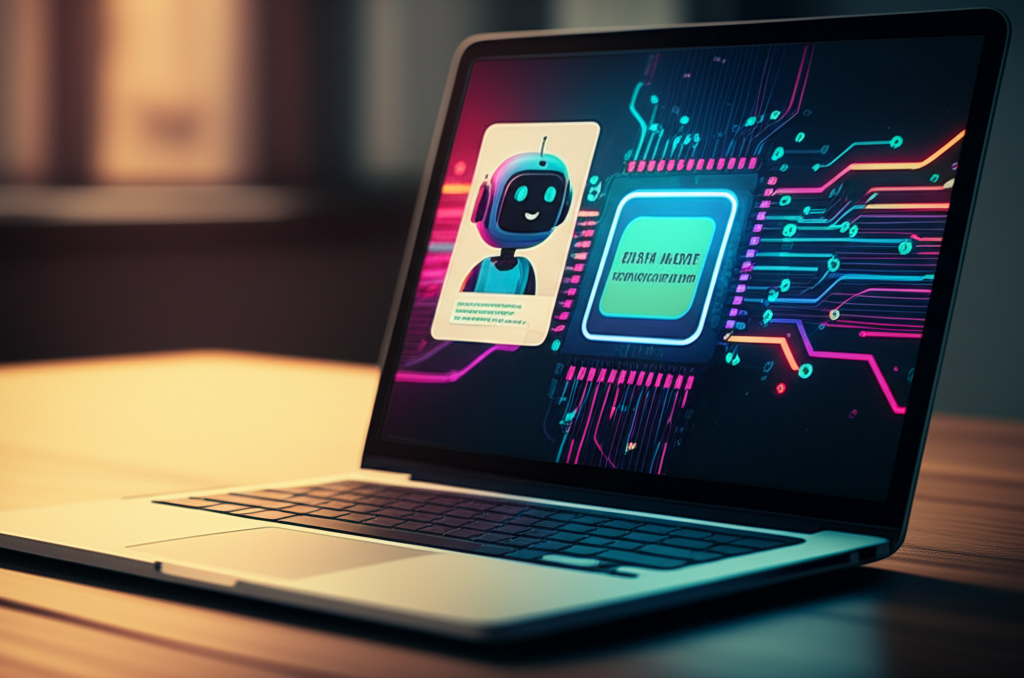
Demystifying the 'Local First' AI Agent Stack
At its core, Clawdbot is designed to bring the intelligence of AI agents directly to your personal devices - your laptop, your desktop, or even a dedicated local server you control. This \"local-first\" philosophy means that instead of sending your data out to the cloud for interpretation and action, the AI processing happens right where you are. This architectural choice has profound implications for privacy, reliability, and user autonomy.
The genius of Clawdbot lies in its ability to bridge the gap between a casual, conversational instruction and a concrete, executable action on your machine. It's not just about understanding what you say; it's about translating that understanding into a series of commands that your computer can actually perform, all while keeping your sensitive information securely within your own digital walls.
From Dialogue to Dynamic Workflows
Imagine this: you're working on a complex project, juggling multiple documents, emails, and appointments. You might ask Clawdbot something like, 'Please gather all project status updates from my emails with the marketing team over the last week, summarize them, and then draft a quick summary email to my manager, prioritizing any action items identified.'
Traditionally, this would involve sending your emails (potentially containing proprietary client information) to a cloud service. Clawdbot, however, approaches this differently. Its local-first architecture allows it to:
- Access Local Data Securely: The AI agent has permissioned access to your local data sources - your email client, document folders, calendar, etc.
- Interpret Natural Language: Using advanced on-device models, it understands the nuances of your request, identifying the specific data points needed and the desired output.
- Construct an Executable Workflow: It intelligently breaks down your request into discrete steps. This could involve filtering emails by sender and date, extracting key phrases, compiling text, and then formulating a new email draft.
- Execute Locally: All these steps are performed on your machine. The summarized text is generated locally, and the draft email is composed within your own email client, never having been transmitted to an external server for processing.
This process transforms a simple chat query into a sophisticated, personalized automation that respects your data sovereignty. It's about giving users granular control over how their information is used and processed.
The Advantages of On-Device AI Processing
The shift to a local-first model, as championed by Clawdbot, brings a host of tangible benefits that address some of the most pressing concerns in our increasingly digitized world.
Enhanced Privacy and Data Security
This is arguably the most significant advantage. When AI processing happens locally, your sensitive data-whether it's personal correspondence, financial information, or proprietary business documents-stays on your device. This drastically reduces the risk of data breaches, unauthorized access, or unintended data sharing that can occur with cloud-based services. For businesses and individuals concerned about compliance and data protection, this is a critical differentiator.
Offline Functionality and Reliability
Cloud-dependent AI is inherently tethered to internet connectivity. A poor connection or an outage can render your AI assistants useless. Local-first AI agents, like those powered by Clawdbot, can operate effectively even when you're offline. This is invaluable for professionals working in remote locations, during travel, or in situations where internet access is intermittent or unreliable. It ensures continuity and uninterrupted productivity.
Greater Customization and Control
With local-first AI, users and developers have deeper control over the AI's behavior and how it interacts with their data. You can fine-tune agents, integrate them with specific local applications in ways that might be impossible via cloud APIs, and build highly personalized automation routines. This level of customization fosters true digital autonomy.
Reduced Latency
Processing data locally often means significantly lower latency. Tasks can be executed almost instantaneously, as there's no need to wait for data to travel to a remote server and back. This results in a more responsive and fluid user experience.
My 25 Years of Experience: The Silent Costs of Cloud Dependence
Looking back over my 25 years in tech, I remember when the cloud was pitched as the ultimate solution for scalability and accessibility. And indeed, it has been revolutionary. However, I also recall early projects, particularly in the manufacturing sector in India, where clients were deeply apprehensive about data leaving their premises. They'd invested heavily in on-premise security and had strict regulations to adhere to. We had to build solutions that minimized external data flow, focusing on local processing and secure network protocols. What felt like a niche requirement back then is becoming a mainstream concern today as AI's capabilities grow and, with it, the potential for data exposure.
Clawdbot vs. Cloud AI: A Comparative Outlook
To further illustrate the distinction, consider this comparison:
| Aspect | Typical Cloud AI | Clawdbot Local-First AI |
|---|---|---|
| Data Processing Location | Remote data centers (AWS, Azure, etc.) | User's local machine or personal server |
| Privacy Implications | Data transmission and storage on third-party servers | Data remains on user's device; significantly reduced risk |
| Connectivity Dependence | Requires stable internet connection | Functions offline or with limited connectivity |
| Customization Potential | Limited by platform APIs and provider offerings | High; direct control over agent logic and integrations |
| Response Latency | Potentially higher due to network travel | Lower; direct local processing |
Recent industry reports from firms like Forrester indicate a growing demand for privacy-preserving technologies, a trend that local-first AI is perfectly positioned to capitalize on.
Empowering the Next Wave of Automation
The advent of local-first AI agents like Clawdbot marks a significant moment for individual users and small to medium-sized businesses (SMBs). For too long, sophisticated automation has been the domain of large enterprises with dedicated IT departments and substantial cloud budgets. Clawdbot democratizes this power, making advanced, personalized automation accessible to everyone.
This technology offers a tangible path for:
- Individuals: To automate personal tasks, manage digital life more efficiently, and secure their personal data.
- Freelancers and Solopreneurs: To streamline client management, project workflows, and administrative burdens without compromising confidentiality.
- SMBs: To gain a competitive edge by implementing powerful, custom automation solutions that are cost-effective and privacy-centric, without the overhead of complex cloud deployments.
The true power of AI lies not in its ability to collect more data, but in its capacity to serve individuals and their goals with unwavering privacy and control. Local-first AI, like Clawdbot, embodies this principle.
As a leader who values innovation that genuinely serves humanity, I see Clawdbot and similar local-first initiatives as beacons of progress. They remind us that technology should empower, not control, and that privacy is not a feature to be negotiated, but a fundamental right. I encourage developers, business leaders, and curious individuals to explore this space. The future of automation is not just intelligent; it's personal, it's private, and it's happening on your terms, right on your machine.



Member discussion