Organizational Culture: Your Silent Engine for Business Success
Discover how organizational culture drives engagement, innovation, and loyalty. Learn practical steps to harness your culture for sustainable growth.


Let's be frank. We've all heard the platitudes about company culture - the buzzwords, the ping-pong tables, the free snacks. While these can be nice additions, they rarely touch upon the true, profound, and often unseen link between a company's internal DNA and its long-term business success. After 25 years navigating the dynamic world of tech, from the early days of dial-up to the current AI revolution, I can tell you with absolute certainty: your culture isn't a fluffy HR initiative; it's your most powerful, silent, strategic engine.
In India, where I've built and scaled businesses, we've seen firsthand how rapid growth can strain the very fabric of an organization. Many focus solely on aggressive sales targets or cutting-edge technology, only to find their teams faltering, their innovation stifled, and their customer relationships eroding. This is where the real work begins - understanding that the values you espouse, the behaviors you foster, and the social environment you create are not secondary concerns, but primary drivers of sustainable performance.
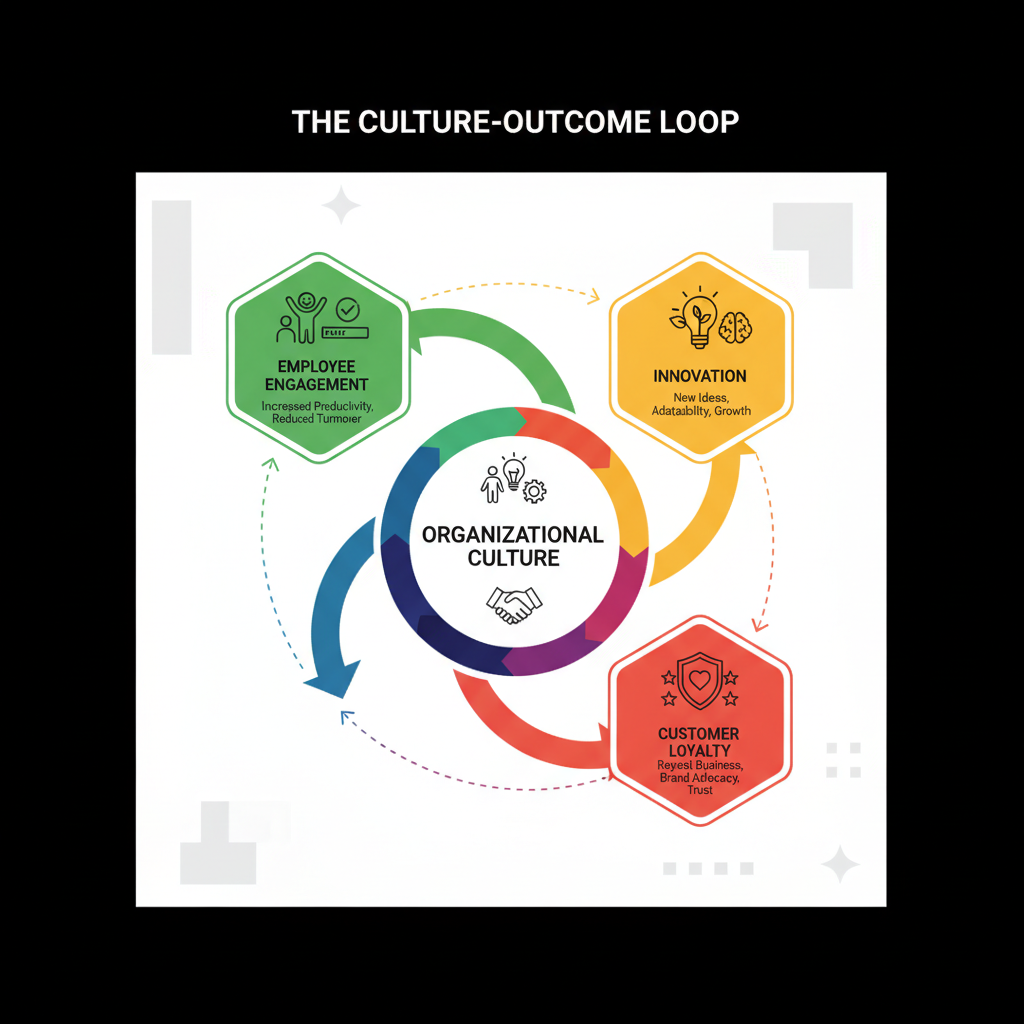
A positive, intentional culture doesn't just make people feel good; it actively fuels employee engagement, ignites a passion for innovation, and builds the kind of resilient customer loyalty that weather any economic storm. It impacts the bottom line far more sustainably than any short-term financial target ever could. For leaders aiming to harness this power, the question isn't *if* culture matters, but *how* to diagnose it and strategically align it with your overarching goals. It's about turning those seemingly 'soft' values into a hard, undeniable competitive advantage.
The Undeniable Link: Culture as a Strategic Imperative
Think of your company's culture as its operating system. Just as a robust OS allows software to run seamlessly and efficiently, a strong, positive culture enables your entire organization to function at its peak. It dictates how decisions are made, how teams collaborate, how feedback is given and received, and how challenges are overcome.
Beyond Perks: The Core Pillars of a Thriving Culture
When I talk about culture, I'm not just referring to superficial elements. I'm speaking about the foundational elements that shape daily interactions and long-term outcomes:
- Shared Values: These are the guiding principles that inform every action, from client interactions to internal problem-solving. Are they clearly defined, understood, and, most importantly, lived?
- Psychological Safety: This is the bedrock of innovation and open communication. Can your team members speak up, take risks, and admit mistakes without fear of reprisal?
- Purpose and Meaning: Do employees understand how their work contributes to a larger mission? A sense of purpose is a powerful motivator that transcends monetary compensation.
- Empowerment and Autonomy: Do you trust your people to make decisions and take ownership? Micromanagement is a culture killer.
- Continuous Learning and Growth: Is there an environment that encourages skill development and embraces new ideas?
The Impact on Your Bottom Line: More Than Just a Feel-Good Factor
The tangible benefits of a well-cultivated culture are significant and measurable. This isn't just theory; it's backed by data and my own experiences.
Driving Employee Engagement and Productivity
Engaged employees are your most valuable asset. They are more productive, more innovative, and less likely to leave. A culture that prioritizes people, fosters trust, and provides opportunities for growth naturally cultivates higher engagement.
I remember an early-stage startup I was involved with in the late 2000s. We were a small team in Ahmedabad, working around the clock to launch a complex software product. There were moments of immense pressure, tight deadlines, and technical hurdles that felt insurmountable. What kept us going wasn't just the equity or the promise of success; it was the palpable sense of camaraderie, the shared belief in our vision, and the leadership's unwavering support. We felt heard, valued, and part of something bigger than ourselves. This culture of mutual respect and shared ownership directly translated into innovative solutions and a product that exceeded expectations, even when facing giants like Oracle or SAP in our niche.
Fostering Innovation and Agility
Innovation doesn't happen in a vacuum. It thrives in environments where experimentation is encouraged, failure is seen as a learning opportunity, and diverse perspectives are welcomed. A culture of psychological safety is paramount here. When your team feels secure enough to propose bold ideas, challenge the status quo, and even fail spectacularly, you unlock their true innovative potential. This is crucial in today's rapidly evolving tech landscape, where staying ahead requires constant adaptation and a willingness to embrace the new, whether it's AI advancements from OpenAI or new development methodologies.
Building Resilient Customer Loyalty
Your internal culture inevitably spills over into your external customer experience. Employees who feel valued and empowered are more likely to treat your customers with the same care and dedication. This creates a virtuous cycle: happy employees lead to happy customers, who in turn become your most loyal advocates. In a world where customer acquisition costs are rising, retaining and delighting existing customers through exceptional service, born from a strong internal culture, is a far more sustainable growth strategy.
The Data Speaks for Itself
The impact of culture on business performance is not just anecdotal. Research consistently highlights its importance:
| Metric | High-Culture Companies | Low-Culture Companies |
|---|---|---|
| Employee Engagement | 70% Higher | N/A |
| Profitability | 12% Higher | N/A |
| Customer Satisfaction | 20% Higher | N/A |
| Innovation Rate | 1.5x Faster | N/A |
Data derived from various industry reports and meta-analyses on organizational culture and performance, including insights from firms like Gartner and McKinsey.
Diagnosing and Aligning Your Culture for Strategic Advantage
Understanding your current culture is the first, and perhaps most critical, step. It requires honest introspection and a willingness to confront uncomfortable truths.
How to Diagnose Your Company's Culture
Start by observing, listening, and asking the right questions:
- Employee Surveys and Feedback: Anonymous surveys can reveal genuine sentiment. Encourage open-ended feedback channels.
- Observation: How do people interact in meetings? How are conflicts resolved? What behaviors are rewarded, and which are penalized?
- Leadership Behavior: As a leader, you are the primary architect of culture. Your actions speak louder than any mission statement.
- Hiring and Onboarding: Are you hiring for cultural fit, or just skills? Does your onboarding process clearly communicate your values?
- Decision-Making Processes: Who is involved in decisions? How are they communicated? Is there transparency?
Practical Steps to Cultivate a High-Performing Culture
Once diagnosed, you can begin the process of intentional culture building:
- Define and Communicate Core Values: Make them clear, concise, and actionable. Embed them in performance reviews and recognition programs.
- Lead by Example: Embody the values you want to see. This is non-negotiable for any leader.
- Foster Transparency and Open Communication: Use platforms like Slack or internal forums to keep everyone informed and engaged.
- Empower Your Teams: Delegate authority and provide the resources needed for success. Trust is a powerful cultural driver.
- Invest in Development: Support continuous learning through training, mentorship, and opportunities to work on challenging projects, perhaps using tools from Microsoft or Google Cloud.
- Celebrate Wins and Learn from Failures: Create a positive reinforcement loop for successes and a blame-free environment for learning from setbacks.
"Culture is not just 'how we do things around here.' It is the collective mindset, the unspoken rules, and the shared spirit that can either be your greatest asset or your most formidable liability. Invest in it deliberately, or watch it evolve by accident to your detriment."
Conclusion: Culture as Your Sustainable Competitive Edge
In the fast-paced world of business, it's easy to get caught up in the immediate metrics - quarterly earnings, user acquisition numbers, or market share gains. However, the companies that endure, that innovate consistently, and that build lasting relationships with customers and employees are those that have mastered their organizational culture. It is the silent, strategic engine that powers sustained success.
As leaders, our responsibility extends beyond setting strategy and managing finances. It includes architecting and nurturing an environment where people can thrive, innovate, and contribute their best. By diagnosing your current culture, aligning it with your strategic goals, and actively cultivating the right values and behaviors, you transform 'soft' aspects into a hard, sustainable competitive advantage. Start today. Your future success depends on it.