Quantum Leap: The Dawn of Everyday Quantum Computing
An insightful, forward-looking article exploring the transformative potential of quantum computing for mainstream society. It compares quantum computing to classical AI like ChatGPT, highlighting their shared promise for a paradigm shift and discussi...

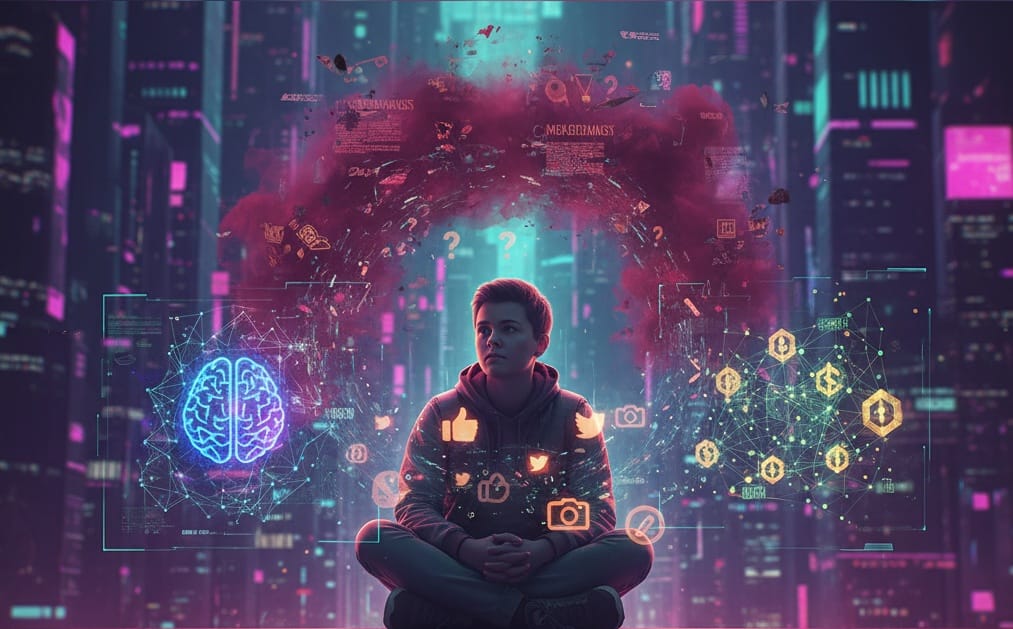
Let's be honest. When we talk about groundbreaking technology, the mind often jumps to the latest AI chatbot making waves. We've seen the transformative power of tools like OpenAI's ChatGPT revolutionize how we create, learn, and even think. It feels like a seismic shift, and for good reason. But what if I told you that another, even more profound, revolution is brewing just beneath the surface, one that promises to reshape our world in ways we can only begin to imagine? I'm talking about quantum computing.
For years, quantum computing has resided in the realm of theoretical physics and highly specialized research labs, a distant, almost mythical, technology. Yet, the whispers are growing louder, the advancements are accelerating, and the potential is becoming undeniably clear. My journey over the last 25 years in technology has taught me one thing: the technologies that seem most inaccessible today often become the building blocks of our tomorrow.
Just as classical AI has democratized complex tasks, quantum computing, despite its fundamentally different principles, is poised to offer its own paradigm shift, moving from esoteric concept to tangible societal benefit. It's not about faster calculations for existing problems; it's about solving problems that are currently intractable, opening up entirely new avenues of discovery and innovation.
Quantum vs. Classical: A Paradigm Shift in Processing
The first thing to understand is that quantum computing is not merely a faster version of what we have today. It operates on entirely different principles, leveraging the bizarre and fascinating laws of quantum mechanics. Where classical computers, including the powerful processors behind AI like ChatGPT, rely on bits that are either 0 or 1, quantum computers use qubits.
The Power of Qubits: Superposition and Entanglement
Qubits can exist in multiple states simultaneously - a phenomenon known as superposition. This means a quantum computer with just a few qubits can explore an exponentially larger number of possibilities than a classical computer with even a massive number of bits. Furthermore, qubits can be entangled, meaning their fates are linked, allowing for complex correlations that are impossible to replicate classically.
Think of it this way: a classical computer tries every key on a keyring one by one to find the right lock. A quantum computer, using superposition, can effectively try many keys at once. Entanglement adds a layer of interconnectedness, enabling it to understand the relationships between those keys and locks in ways we can't comprehend classically.
This fundamental difference is why quantum computers excel at specific types of problems that are simply out of reach for even the most powerful supercomputers today. These include:
- Discovering new drugs and materials through molecular simulation.
- Optimizing complex logistical networks on a global scale.
- Developing advanced, unhackable encryption.
- Solving intricate financial modeling problems.
- Revolutionizing artificial intelligence itself with new quantum algorithms.
The Path to Democratization: From Labs to Laptops?
The question on everyone's mind is: when will quantum computing become accessible to the average person or business? It's a valid concern, especially given the current complexity and cost associated with quantum hardware. Today, accessing quantum computing power typically involves cloud platforms offered by pioneering companies like IBM, Microsoft Azure, and Google Cloud.
These platforms provide access to quantum processors, but they still require specialized knowledge to program and utilize effectively. This is a far cry from the intuitive interfaces we've come to expect from classical AI tools. However, the trajectory is unmistakable. We are witnessing a concerted effort to abstract away the complexities and make quantum computing more user-friendly.
I recall an early project in the late 90s, working with distributed computing for scientific simulations. The setup was incredibly complex, requiring deep system administration skills and specialized hardware. It felt like a niche pursuit for academics. Yet, within a decade, cloud computing started abstracting that complexity, making powerful computing resources available to millions. This is the parallel I see for quantum computing.
The "ChatGPT Moment" for Quantum
The "ChatGPT moment" for quantum computing won't necessarily be a single product. Instead, it will be a confluence of factors: increasing accessibility through simplified APIs and cloud services, the development of higher-level programming languages and frameworks tailored for quantum algorithms, and the emergence of practical, real-world applications that demonstrate undeniable value. We are already seeing the early stages of this with quantum-inspired algorithms running on classical hardware, bridging the gap.
Consider the development of quantum algorithms. While algorithms like Shor's (for factoring large numbers) and Grover's (for searching unsorted databases) are groundbreaking, the broader development community needs tools that are easier to grasp and implement. This is where we'll see innovation, much like how libraries and frameworks on GitHub made classical programming accessible to a wider audience.
The Near and Long-Term Future of Quantum
Predicting the exact timeline for any disruptive technology is a fool's errand, but we can observe the trends. We are currently in the NISQ (Noisy Intermediate-Scale Quantum) era. This means current quantum computers have a limited number of qubits and are prone to errors. However, progress is rapid. We are seeing fault-tolerant quantum computing as the ultimate goal, where errors can be corrected, unlocking the full potential.
The transition will likely be gradual, with hybrid quantum-classical approaches leading the way. Businesses will leverage quantum computing for specific, high-impact tasks while relying on classical systems for everything else. This phased adoption will allow for learning, development, and a more organic integration into existing workflows.
| Metric | Classical AI (e.g., ChatGPT) | Quantum Computing (Projected) |
|---|---|---|
| Underlying Principle | Machine Learning, Neural Networks | Quantum Mechanics (Superposition, Entanglement) |
| Current Accessibility | High (Web interfaces, APIs) | Moderate (Cloud platforms, specialized knowledge) |
| Problem Domain | Natural language processing, pattern recognition, generation | Optimization, simulation, complex problem-solving, cryptography |
| Expected Democratization Timeline | Ongoing, widespread | 5-10 years for practical impact, 10-15+ for widespread adoption |
| Key Players | OpenAI, Google, Meta | IBM, Google, Microsoft, Rigetti, IonQ |
"The true revolution lies not just in the power of quantum computation, but in our ability to translate that power into solutions that address humanity's grand challenges. Accessibility and intuitive interfaces will be the keys to unlocking this potential for the mainstream."
What Can We Expect by 2030?
By the end of this decade, I envision quantum computing will have moved beyond niche applications to become a vital tool for researchers and large enterprises. We'll see significant breakthroughs in fields like pharmaceutical discovery, materials science, and financial risk analysis. Quantum-powered simulations will become indispensable for designing new products and understanding complex systems.
Furthermore, quantum security solutions will begin to emerge, preparing us for the post-quantum cryptography era. While personal quantum computers in every home are still a distant dream, cloud-based quantum services will become as common for specialized tasks as cloud storage is today. The key will be developing user-friendly quantum programming environments and libraries, akin to how Microsoft's .NET framework or Oracle's database tools simplified classical development.
Embrace the Imminent Quantum Shift
The journey from theoretical possibility to widespread adoption is never straightforward. It requires persistent innovation, significant investment, and a willingness to reimagine what's possible. The parallels with the rise of classical AI are striking: a period of intense research, followed by the development of accessible tools, and finally, a societal transformation powered by democratized access.
We are standing at the precipice of a new era, one where quantum computing will move from the specialized labs of researchers and tech giants to become a powerful force for good in mainstream society. While the exact timeline remains an evolving narrative, the direction is clear. As a leader and an enthusiast, I urge you to start exploring this field, understand its potential, and prepare for the quantum leap that is already underway.
What steps are you taking to prepare your organization or your career for the quantum future? Share your thoughts and strategies in the comments below!