
Anthropic's Claude: The AI Assistant That Does, Not Just Talks
The Real Shift: When AI Stops Chatting and Starts Doing
For years, we've talked about Artificial Intelligence as a revolutionary force. We've seen chatbots that can converse, write poetry, and even debug code. But for many of us in the trenches - building companies, leading teams, and pushing innovation - there's always been a missing piece: true, seamless integration into our daily workflows. I'm Sandeep Mundra, and after 25 years at the forefront of technology, I can tell you that the latest move by Anthropic with its Claude AI is precisely that missing piece. They're not just enhancing a chatbot; they're fundamentally re-architecting how we interact with our essential tools.
The announcement that Claude can now interface directly within platforms like Slack, Asana, and Figma isn't just another feature update. It's a strategic masterstroke that moves AI from the periphery into the very heart of our operational processes. No more context switching, no more copy-pasting between applications. This is about making AI an ambient, indispensable part of your work, not just a standalone tool you visit.
Beyond Conversation: The Power of Context-Aware Action
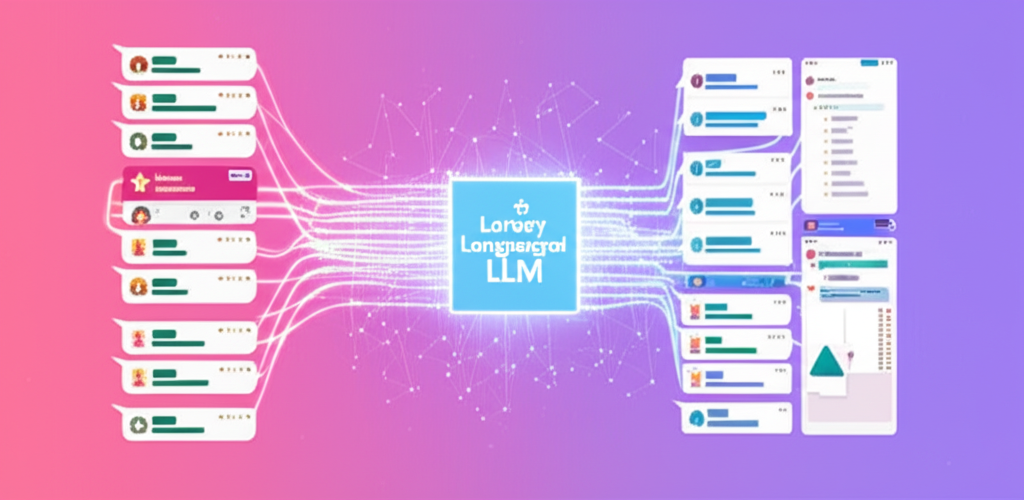
For too long, AI assistants have been like incredibly knowledgeable consultants who can only give advice from their office. You have to go to them, explain your problem in isolation, and then take their advice back to your actual workspace to implement it. This is where Anthropic's new approach, built on their Model Context Protocol (MCP), truly shines. It's about bringing the AI *to* the work, directly into the environments where decisions are made and tasks are executed.
What Does This Mean for Developers and Users?
From a developer's perspective, this opens up an entirely new paradigm for building. Instead of merely integrating with an LLM API for text generation, developers can now leverage MCP to create rich, interactive experiences where Claude acts as an intelligent agent directly within their applications. Imagine building a project management tool where Claude can, in real-time, analyze task dependencies, suggest resource allocation, and even automatically update deadlines based on team member availability in Asana.
For end-users, the benefits are immediate and profound. The friction of switching between tabs and applications-a constant source of distraction and lost productivity-is significantly reduced. The ability to ask Claude to, for example, "Draft a Slack message summarizing these design revisions from Figma and post it in the #design-feedback channel" is incredibly powerful. It transforms the AI from a passive recipient of prompts into an active participant in the workflow.
This also addresses a critical point highlighted by numerous industry reports, including those from Gartner, regarding the challenges of AI adoption. The primary hurdle has often been the complex integration and user onboarding. By embedding AI directly into the tools people already use and trust, Anthropic dramatically lowers this barrier.
"The true power of AI in the enterprise isn't about having the smartest model; it's about making that intelligence effortlessly accessible where and when it's needed most. Anthropic's move is a significant step towards ambient intelligence."
A Micro-Story from My 25 Years in Tech
Back in the early 2000s, when I was just starting out with my first venture in Gujarat, the idea of collaborative software was revolutionary. We were still wrestling with email chains and shared network drives. I remember spending weeks trying to streamline our client reporting process. It involved data from a custom-built CRM, financial figures from an early accounting package, and presentation decks created in PowerPoint. Consolidating this into a single, coherent report was a manual, painstaking task, prone to endless revisions. We dreamed of a system where information flowed seamlessly. Looking at what Anthropic is doing now, it feels like that dream, amplified a thousandfold, is finally within reach. The ability for an AI to understand the context across these disparate tools and orchestrate the creation of a unified output is precisely the kind of workflow automation we yearned for then, but could only imagine.
The Competitive Landscape: A Race Towards Ambient Intelligence
This strategic pivot by Anthropic forces us to re-evaluate the future of AI chatbots. Are we heading towards a future where we primarily interact with a single, overarching AI interface that orchestrates all our other tools, or will we continue to use many specialized AI assistants, each with its own login and context?
Shifting from Standalone to Integrated Intelligence
The dominant players in the AI space, like OpenAI with ChatGPT and Microsoft with Copilot integrated into its Azure ecosystem and Office suite, have largely focused on enhancing their own platforms or offering a distinct conversational interface. Anthropic's approach, however, is distinctly different. By building a protocol (MCP) and fostering partnerships across a broad spectrum of popular SaaS tools, they are positioning Claude as a neutral, universal orchestrator.
This "assistant-first" integration means that the user experience will be defined by the AI's ability to fluidly move between tasks and contexts. The competitive battleground will likely shift from the sophistication of the LLM alone to the breadth and depth of its integrations and the intelligence with which it can act upon that integrated context. The rise of "ambient intelligence"-where AI is present and helpful without explicit command, woven into the fabric of our digital lives-is no longer science fiction.
| AI Integration Strategy | Key Platforms | Primary User Experience | Partnership Model |
|---|---|---|---|
| Platform-Native Enhancement | Microsoft 365, Google Workspace | Embedded features within existing applications | Proprietary, ecosystem-centric |
| Universal Orchestration (via MCP) | Slack, Asana, Figma, Box, Canva, etc. | Direct interaction via chat interface, acting as an agent | Open protocol, broad ecosystem partnerships |
| Standalone Conversational Interface | Web UI, APIs | Direct chat interaction with AI model | API-based, limited direct app integration |
Implications for the Future of Work
This shift demands that we, as leaders and innovators, think differently. Our focus must move beyond just adopting AI tools to strategically integrating AI into our core processes. Here's what that means:
- Rethink your tech stack: Are your current tools compatible with an "assistant-first" model?
- Invest in integration expertise: Developing or adopting solutions that leverage protocols like MCP will be crucial.
- Train for AI collaboration: Your teams will need to learn how to "manage" and "direct" these AI agents effectively.
- Prioritize security and governance: With AI acting on your behalf, robust oversight is paramount.
Conclusion: Embracing the Era of Actionable AI
Anthropic's move with Claude's interactive apps is more than just an iteration; it's a declaration of intent. It signals a definitive shift from AI as a novel conversational partner to AI as an indispensable, context-aware work assistant. This approach not only streamlines workflows but also fundamentally redefines the user experience, embedding intelligence directly into the fabric of our daily digital operations.
As leaders, developers, and users, we must embrace this evolution. The future of work isn't about finding smarter chatbots, but about building smarter, more integrated systems where AI does the heavy lifting. I encourage you to explore these new capabilities, experiment with how Claude can orchestrate your existing tools, and prepare your teams for a future where collaboration with AI is not an option, but a necessity. Let's build that future, together.

Member discussion