


































































































IndiaNIC runs out of Ahmedabad, but the business doesn't stop there. Our core delivery team sits in India; our client-facing and sales presence reaches into the US; and our Gulf operations run on their own rhythm entirely. On paper that's three offices. In practice, it's three cultures, three sets of working hours, and one leadership team trying to keep them pointed in the same direction.
Leading a single office is hard enough. Leading across Ahmedabad, the US, and the Gulf is a different discipline — the org chart barely changes, but almost everything else does: how decisions get made, how trust gets built, and how you actually know what's happening on the ground when "the ground" is three time zones away.
Distance changes what leadership means
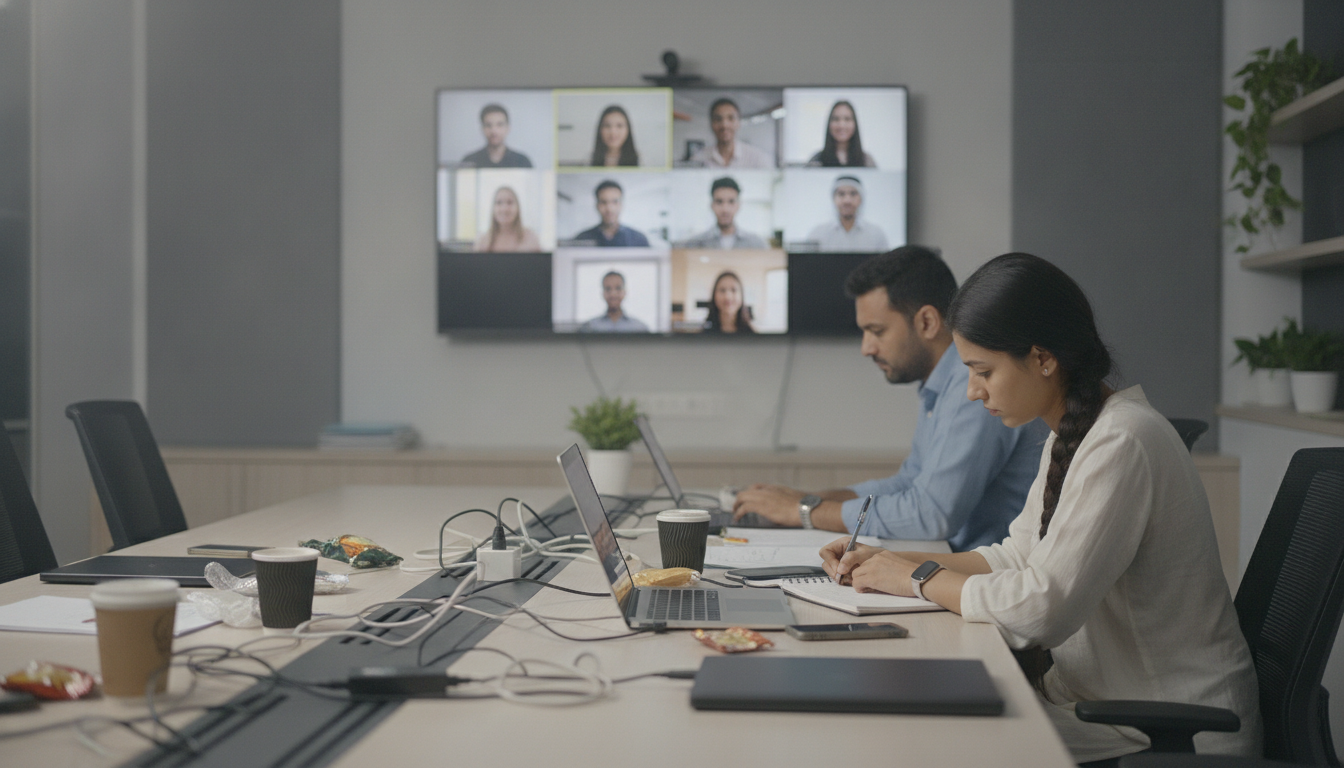
In a single office, leadership is partly ambient. You walk the floor, you catch a tone shift in a stand-up, you notice when someone's gone quiet in a meeting. None of that travels well across a video call — and it travels even less when your US team is starting their day as Ahmedabad is wrapping up, and the Gulf office is somewhere in between on both the clock and the culture.
The instinct is to compensate with more meetings, more check-ins, more "syncs" squeezed into the two or three hours where everyone's calendars overlap. That's usually the wrong fix. What leading across Ahmedabad, the US, and the Gulf actually requires is fewer, better-designed touchpoints, backed by systems that surface the right information without me having to go looking for it. The goal isn't to be everywhere — it's to make sure I don't need to be.
Different cultures, same core team
The harder problem isn't geography — it's culture. IndiaNIC's core team blends Indian, American, and Gulf working norms around hierarchy, communication style, conflict, and even what "done" means. What reads as directness in a US client call can read as abrupt in Ahmedabad. What looks like careful consensus-building in India can look like indecision to a US stakeholder waiting for a yes or no. The Gulf side adds its own pace and protocol on top of both.
A few things that have actually helped us:
- Name the differences instead of smoothing over them. Our core team works better when we talk openly about the fact that Ahmedabad, US, and Gulf norms aren't the same, rather than pretending one office's style is the default everyone else should adopt.
- Anchor on shared standards, not shared style. Each location keeps its own working rhythm, but everyone is held to the same bar for quality, ownership, and communication clarity — whether the update comes from Ahmedabad or Dubai.
- Rotate who accommodates. If Ahmedabad always shifts to US hours, or the Gulf team always adjusts to Indian holidays, resentment builds quietly. We try to spread that friction around rather than let it default to whoever has less leverage.
- Invest in the core team's shared context deliberately. Culture doesn't align itself — it takes shared documentation, recorded decisions, and leaders who repeat the "why" often enough that it survives translation across Ahmedabad, the US, and the Gulf.
The core team — the people who carry institutional memory and set the tone for everyone downstream — is where this matters most. If IndiaNIC's core team can't operate as one unit across three regions, that fracture shows up in every project it touches.
Where AI tools changed the equation
The piece that's genuinely shifted for us is reporting and visibility. For years, cross-location leadership at IndiaNIC relied on status updates written by hand across Ahmedabad, the US, and the Gulf — inconsistent in format, uneven in quality, filtered through whoever wrote them, and usually a summary of activity rather than a signal of what actually mattered.
That's part of why we built Pulse — an in-house AI-powered reporting system designed specifically to close that gap between offices. A few concrete ways it's changed things:
- Consistent rollups across locations. Instead of Ahmedabad, the US, and the Gulf each reporting in their own format and voice, Pulse normalizes updates into a single, comparable structure — so I'm reading signal, not translating style.
- Faster synthesis, less filtering. Pulling from tickets, channels, and team activity, Pulse generates a working summary in minutes instead of a manager spending an afternoon writing one — which means less of the story gets softened on the way up to leadership.
- Surfacing what's actually anomalous. A good AI reporting layer doesn't just summarize — it flags what's different from the usual pattern: a location suddenly slower on a metric, sentiment shifting in one office, a recurring blocker nobody's escalated yet.
- A shared source of truth across time zones. When a report is generated from the same underlying data everywhere, it stops being "the US office's version" versus "Ahmedabad's version." Everyone is arguing about the same facts, whether they're reading it at 9am in India or 9am in the US.
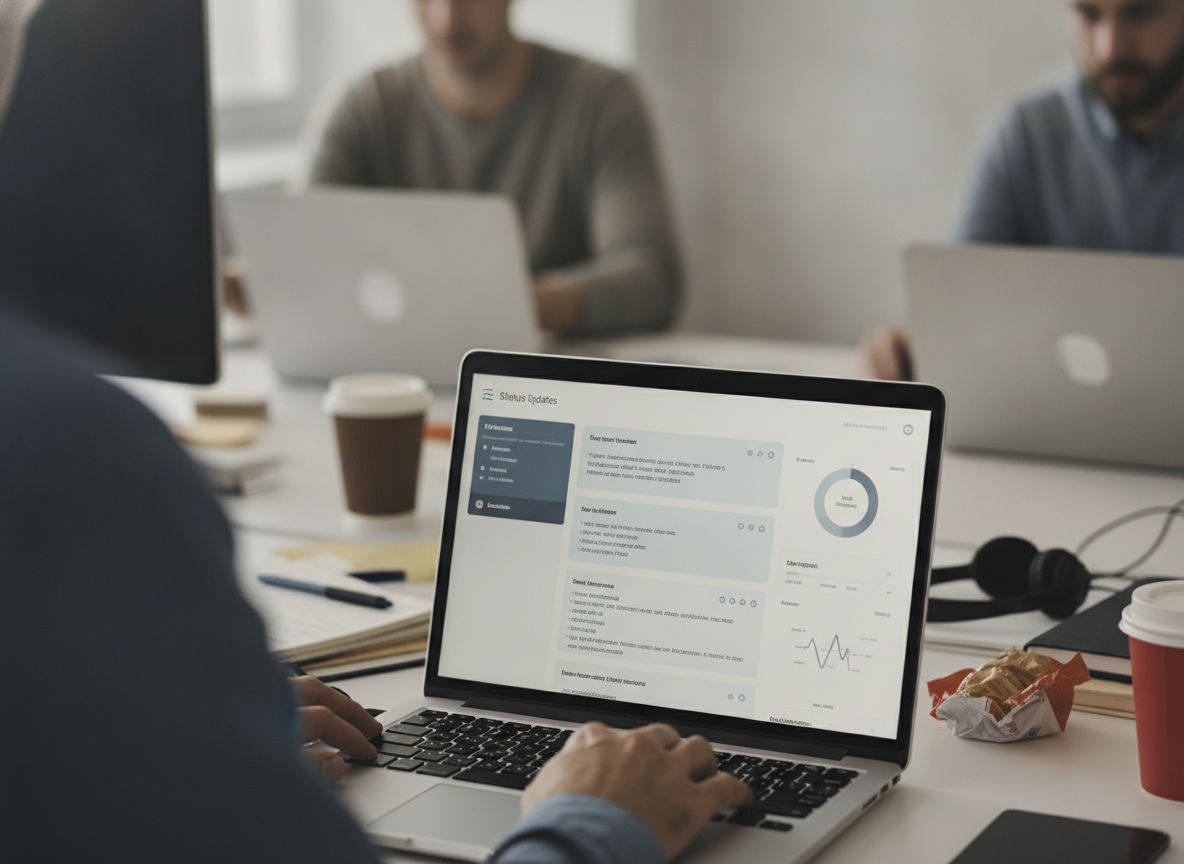
None of this replaces judgment. Pulse's output is a starting point, not a verdict — it still takes a leader who knows Ahmedabad, the US market, and the Gulf context to read between the lines and ask the right follow-up question. But it does something important: it's lowered the cost of staying informed, which means I spend less time chasing status out of three offices and more time on the decisions that actually need a human.
What this adds up to
Leading IndiaNIC across Ahmedabad, the US, and the Gulf isn't really about managing distance. It's about building enough shared culture that distance stops mattering as much, and enough visibility — now largely through Pulse — that I'm never the last to know something important. Culture is the harder, slower half of that work; it takes deliberate leadership, not tooling. Visibility is where AI has made the real difference, turning what used to be a lagging, manual process into something close to real time.
Get both right, and "multi-location" stops being a caveat on how IndiaNIC operates. It just becomes how we operate.