




































































































Here's a stark truth: 70% of software projects fail to meet their business objectives, not because of bad ideas, but because of execution gaps. This number hasn't budged significantly in a decade, and frankly, it's an indictment of our industry. I remember back in the early 2000s, a client approached me with a vision for an e-commerce platform. He had sketches on napkins, a passionate explanation, and a fervent belief. We plunged in, fueled by that energy, but without a clear roadmap. We spent months debating features that weren't core, chasing 'the vibe' as he called it. By the time we delivered, the market had shifted, and the product felt dated. The single realization that hit me then was profound: passion needs structure, and innovation thrives best within disciplined governance. That experience, and many others like it, shaped my perspective on how we must adapt our project management strategies for the current landscape.
The Dawn of the 'Vibe Coder' Client
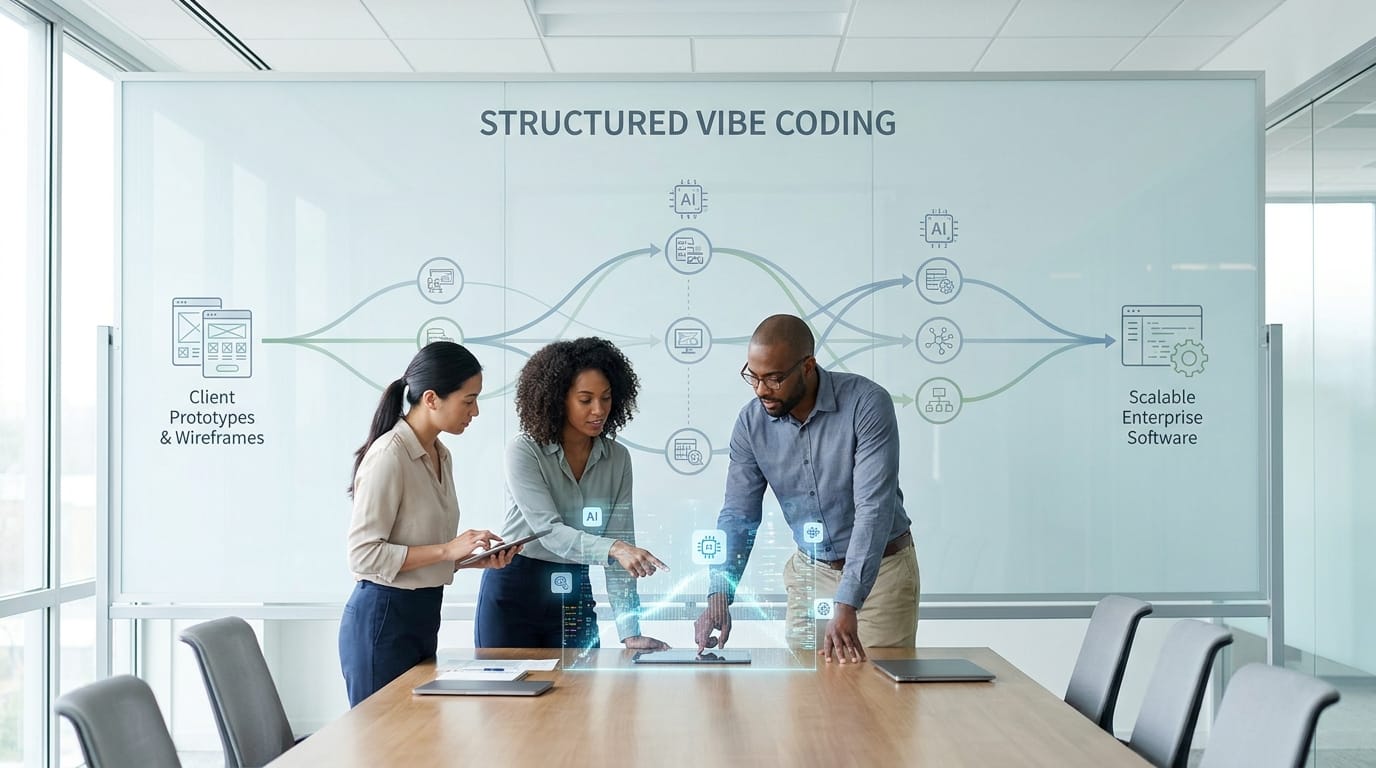
Gone are the days when clients typically approached with a nebulous concept and a handshake. Today, they arrive armed with sophisticated assets: meticulously crafted wireframes, interactive prototypes built in tools like Figma or Adobe XD, and sometimes even functional proofs of concept. This 'vibe coding' era, as I've come to call it, is a double-edged sword. On one hand, it's a testament to increased client savviness and the democratization of product development tools. On the other, it introduces new challenges for project management, demanding a more agile yet inherently disciplined approach to transform these innovative starting points into successful, scalable software products.
Bridging Innovation and Execution: Core Principles
The fundamental shift is moving from managing abstract requirements to validating concrete artifacts. This requires us to evolve beyond traditional, linear project management methodologies. We need to embrace a hybrid approach that melds agile responsiveness with rigorous governance, ensuring creative momentum doesn't lead to chaotic delivery. The two core pillars I lean on are Intelligent Requirement Validation and AI-Augmented Iteration. These aren't buzzwords; they are practical frameworks that have repeatedly steered my teams away from the pitfalls I once stumbled into.
Intelligent Requirement Validation is about scrutinizing those client-provided assets with a critical, yet collaborative, eye. It's not about finding flaws; it's about ensuring alignment with business objectives, technical feasibility, and user experience. We go beyond simply accepting a wireframe; we probe its purpose, its user journey, and its potential edge cases. We ask: Does this prototype truly solve the problem? Is it technically achievable within our defined constraints? What are the potential scalability issues? This rigorous, yet swift, validation process, often involving workshops with the client and internal tech leads, sets a clear, shared understanding of the project's DNA from day one. It's this upfront clarity that prevents scope creep disguised as innovation later on.
AI-Augmented Iteration leverages the power of artificial intelligence to accelerate our development cycles and enhance our decision-making. I'm not talking about replacing human ingenuity, but augmenting it. AI can analyze vast datasets to predict potential roadblocks, suggest optimal task breakdowns for sprints, and even identify areas of code that might be prone to bugs. This frees up our human talent to focus on the more complex, creative problem-solving aspects of software development. For example, tools from OpenAI or Anthropic can assist in generating user stories, drafting API documentation, or even suggesting test case scenarios based on requirement specifications. This isn't science fiction; it's a practical application of AI that is already transforming how we plan and execute.
The Art of Requirement Validation in the 'Vibe Coding' Era
When a client presents a polished prototype, it's tempting to jump straight into coding. However, my experience has taught me the hard way that this is a mistake. We need a structured way to validate these inputs. This starts with comprehensive requirement elicitation sessions, even with ready-made assets. We involve business analysts, lead developers, and UI/UX designers to dissect every element. We use techniques like user story mapping and impact mapping to connect each feature back to the overarching business goals. If a client provides a working proof of concept, we meticulously trace its functionality, document its architecture, and identify any technical debt or scalability limitations that might hinder future growth. It's about understanding the 'why' behind every pixel and every line of code they've already envisioned.
Leveraging AI for Agile Planning and Execution
The power of AI in project management today is immense and largely untapped by many teams. For planning, AI tools can ingest requirement documents and generate initial project breakdowns, suggest optimal sprint lengths, and even predict resource needs. During sprint execution, AI can monitor progress, flag potential deviations, and recommend adjustments. For instance, predictive analytics can forecast the likelihood of a sprint falling behind schedule based on historical data and current team velocity. This allows us to intervene proactively rather than reactively. I've seen AI-powered tools help us identify bottlenecks in our CI/CD pipelines or suggest code refactoring opportunities that improve performance and reduce future maintenance costs. Tools like Gartner research highlights how AI in software development is moving from niche to necessity, and we're embracing it wholeheartedly.
Implementing Structured Delivery: A Step-by-Step Approach
Transforming client-provided innovation into scalable software demands a disciplined, phased approach. Here's how I guide my teams:
- Artifact Deep Dive & Scope Refinement: This is where we meticulously analyze the client's wireframes, prototypes, or PoCs. We don't just review; we interrogate. Our goal is to identify any ambiguities, inconsistencies, or potential conflicts with business objectives. This phase involves detailed walkthroughs with the client to ensure a shared understanding of the delivered assets.
- Technical Architecture Design: Based on the validated requirements, we design a robust, scalable architecture. This is crucial for ensuring the product can grow with the business. We prioritize flexibility and maintainability, considering cloud-native approaches on platforms like AWS, Azure, or Google Cloud.
- Agile Sprint Planning with AI Assist: We break down the project into manageable sprints. AI tools assist in estimating task durations, identifying dependencies, and allocating resources, providing a data-driven foundation for our sprints. We prioritize features based on business value and technical dependencies, using frameworks like MoSCoW.
- Rapid Iteration Cycles: Each sprint focuses on delivering a working increment of the software. We conduct regular internal reviews and demos to the client, fostering a continuous feedback loop. This allows for rapid course correction and ensures we're always aligned with the evolving client vision.
- Human Oversight and QA: While AI assists, human judgment remains paramount. Our Quality Assurance team, empowered by automated testing frameworks and AI-driven defect prediction, rigorously tests each increment. This ensures not just functionality, but also performance, security, and usability.
- Comprehensive Documentation: We maintain living documentation that evolves with the project. This includes technical specifications, API documentation, and user guides, ensuring knowledge transfer and long-term project maintainability. Tools like Notion or GitHub wikis are invaluable here.
- Stakeholder Communication & Change Management: Transparent and frequent communication with stakeholders is non-negotiable. We use tools like Slack and regular video conferences via Zoom to keep everyone informed. A clearly defined change management process ensures that any deviations from the initial scope are assessed for impact on timeline and budget before implementation.
- Proactive Risk Control: We identify potential risks early and develop mitigation strategies. This includes technical risks, market risks, and resource risks. Regular risk assessment meetings ensure we stay ahead of potential issues.
Defining and Measuring Success in the Modern Landscape
Success in this new era is measured not just by delivering on time and within budget, but by the business value the software creates. We look at metrics such as user adoption rates, customer satisfaction scores, return on investment (ROI), and the scalability of the product to meet future demands. For instance, if a client provides a prototype for a mobile app, success would be measured by the number of downloads, active users, and in-app purchase conversion rates, alongside the technical performance and stability of the application. According to McKinsey, organizations that excel at translating digital innovation into business value often have strong governance frameworks that enable agility. We aim to be one of them.
It's easy to get caught up in the excitement of new ideas and polished prototypes. I've been there. The lure of 'just building it' is strong. But without a disciplined approach to validation, architecture, and iterative delivery, that excitement can quickly turn into frustration and missed opportunities. The key isn't to stifle innovation, but to channel it effectively.
Here's a look at how structured project management impacts key project metrics:
According to Statista, projects with clear requirements and strong stakeholder involvement have a significantly higher success rate. The 'vibe coding' era elevates this; clear artifacts are a fantastic starting point, but they must be managed with precision. The future belongs to those who can marry creative input with structured, intelligent execution.
Conclusion: Navigating the Future of Software Delivery
The landscape of software development has irrevocably changed. Clients are more informed, their ideas are more concrete, and the pace of innovation is relentless. As professionals, we can either be swept away by this tide or learn to navigate it with expertise. Embracing structured delivery, enhanced by AI and driven by a deep understanding of client needs, is not just a best practice; it's a necessity for transforming those 'vibe coding' inspirations into tangible, scalable software products that deliver real-world impact. It's about building bridges from brilliant ideas to impactful realities, one well-managed sprint at a time.
Reflecting on your own projects, what is one specific practice you will implement this week to bridge the gap between a client's innovative concept and your team's structured delivery?